Seniors in Santa Cruz hear about ways to avoid scams

Seniors in Santa Cruz hear about ways to avoid scams
"SANTA CRUZ - Soquel resident Jack Roberts, a 74-year-old retiree, wouldn't discuss what he did during his professional career, but whatever it was, it 'trained me to be skeptical' and to 'question everything.'

That attitude would serve well the entire population, but specifically senior citizens, a segment of the population that's increasingly being targeted by the pervasive scams circulating on the Internet and snail mail by those intent on separating their trusting souls from the nest eggs it took them years to accumulate - but can take just moments to lose.

'I just came today to reinforce what I already knew and see if there was anything else I could pick up,' Roberts added at the conclusion of the Senior Scam Stopper seminar, held Saturday at the Santa Cruz Police Department. It was co-hosted by the Contractors State License Board and Assemblyman Bill Monning, D-Carmel.

Among the tips Roberts picked up was a suggestion to open a separate bank account containing a limited amount of money specifically for online purchases. Even if a scam artist figures out a way to access that account, 'that's the only money they can get at,' he said."

Via Seniors in Santa Cruz hear about ways to avoid scams - Santa Cruz Sentinel

4 new internet scams- The Times of India

"Internet scammers generally want one thing: your money. To get it, they'll try to scare you into divulging account information, trick you into opening a harmful attachment, or dupe you into sending personal information. In short, scammers trade on the hope that you're gullible enough to fall victim to their deceptions, which are constantly changing.

Here's a rundown of some of the latest types of internet fraud schemes and advice on how to protect yourself."

  • From the 'scare you to act' department come email messages that threaten to deactivate your account if you do not click an embedded link to verify account details. Often, these messages claim that some kind of suspicious activity has occurred with your account, and the only way that you have to keep your account from being shut down is to click the embedded link immediately or within a certain amount of time.

  • Email attachments, especially in messages from people you don't know, are common carriers of malware, spyware, or viruses. Scammers know that, by now, most people either do not open attachments sent by strangers or set up spam filters to remove such messages from their inbox automatically.

  • One prevalent scam, for example, instructs recipients that Facebook is implementing a new login system that offers increased account security. To use the new system, the message says you must click a link to update your account. If you do, your login information will be stolen once you enter it.

  • The latest twist on this tactic, however, is for the email scammer to claim that in order to receive the prize or monetary award, you must first provide a host of information by email.


4 new internet scams- The Times of India

Johan Manuel Méndez y Svechinskaya Kristina

South Korea Internet Frauds
El mensaje enviado alrededor de las 01:20 de la Mañana en su cuenta en Twitter escribió que, ahora las mujeres también pueden entrar en el mundo de la informática y pongo el link de la imagen de la Joven de 21 años, en su página en Facebook Kristina Svechinskaya que el día martes fue publicada por la revista Generacción como la mujer hacker más bonita del mundo. La Hackers Kristina Svechinskaya una de las 37 personas acusadas esta semana de robar más de 3 millones de dólares en Estados Unidos y casi 10 millones de dólares en cuentas bancarias de todo el Reino Unido.
El presidente Barack Obama bromeó diciendo que no era su decisión de enviar de vuelta a Rusia a la Joven.
Ella apareció en la corte en Nueva York con botas altas y los pantalones vaqueros ceñidos y lloraba cuando estaba siendo acusado de robar $ 35.000 Estados Unidos.
El grupo utilizó el software de hacking Troyano Zeus Quién copiaba el nombre de usuario y contraseñas. $ 3 millones (4.000.000 dólares) de cuentas bancarias pertenecientes a las pequeñas empresas y particulares.

Via http://www.pysnnoticias.com/

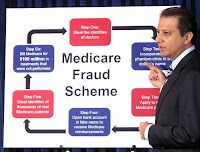
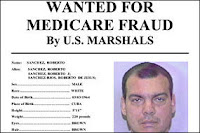
Elderly Can Be Easy Targets of Scheme - Menomonee Falls, WI Patch

Elderly Medicare Fraud
Elderly Can Be Easy Targets of Medicare Fraud Scheme - Menomonee Falls, WI Patch: "Hello, this is Medicare calling. Your card has expired. We need to have your old number so we can send you a new Medicare card.

The voice on the other end of the phone line may be a stranger but the message is becoming all-too-familiar. Recent news and discussion about possible changes in Medicare drug benefits has sparked an increase in these kinds of calls with opportunistic scammers trying to convince the elderly to give out personal information.

Medicare and other types of consumer fraud are on the rise in this country and senior citizens are continually vulnerable because they are assumed to have money. There is also a general perception that the elderly are reluctant to report fraud."

AFP: Internet frauds jump in S.Korea: police

South Korea Internet Frauds
AFP: Internet frauds jump in S.Korea: police: "SEOUL — The number of arrests linked to online fraud in South Korea, one of the world's most wired countries, increased by more than 50 percent in the past two years, police warned Wednesday.
A total of 26,826 people were detained last year on charges of swindling online shoppers through a variety of fraudulent transactions in cyberspace, the National Police Agency said in a report.
'Despite crackdowns, online frauds in this country have been rising sharply,' ruling party lawmaker Yoon Seok-Yong told journalists.
Low-income earners are the main victims of such scams, he said, urging government to come up with measures to protect them from being robbed.
South Korea is ranked first for wireless Internet penetration among the 34 states who are members of the Organisation for Economic Cooperation and Development (OECD).
In terms of wireless broadband subscriptions last year, South Korea had 89.8 per every 100 people, according to the OECD.
Finland was second with 84.8 per every 100 people, followed by Sweden with 82.9, Norway 79.9 and Japan with 76.7."

Romanian man gets 4 years in Internet fraud case - Chicago Tribune

Romanian man gets 4 years in Internet fraud case - Chicago Tribune: "A Romanian man was sentenced to 48 months, or 4 years, in federal prison today for his role in an Internet fraud conspiracy, federal officials said.

Adrian Ghighina, 33, was sentenced by U.S. District Judge Matthew F. Kennelly in Chicago, according to a press release issued by the Department of Justice. Ghighina pleaded guilty in February to one count each of wire fraud and conspiracy, officials said."
Ghighina, who entered the United States legally in late 2004, acted as a “money mule” in an Internet fraud conspiracy, officials said. Ghighina’s co-conspirators, many of whom are in Romania, created fraudulent online auctions for expensive items such as cars, motorcycles and RVs on websites such as eBay, Craigslist and AutoTrader.com, according to the release.

People who responded to the false listings were directed to send payment for the non-existent items using Western Union and bank wire transfers to accounts controlled by Ghighina, officials said.

Ghighina admitted that he moved from city to city where he opened accounts at various banks using false identification. The victims never received the items for which they had paid.

From September 2005 until his arrest in October 2009 in Miami, Ghighina opened accounts and/or received funds in Illinois, the District of Columbia, Florida, New York and Arizona.

Ghighina was indicted by a federal grand jury in the Northern District of Illinois and in also by a federal grand jury in the District of Columbia.

Decatur man sentenced for student loan fraud  | ajc.com

Decatur man sentenced for student loan fraud | ajc.com: "Will H. Callaway, Jr., 42, was sentenced on Friday to six months in federal prison and another six months on house arrest for applying for lying to get $30,000 in school loans he never intended to use for educational purposes, court officials said.

According to federal documents, Callaway applied for several loans over the internet between 2007 and 2009 using bogus information.

The loans he received were processed by the Pennsylvania Higher Education Assistance Agency (PHEAA), located in Harrisburg, Penn., and Callaway subsequently was prosecuted and sentenced in Harrisburg.

He was attempting to obtain more money than he’d already gotten from several online colleges when federal authorities stopped him, court officials said.

In addition to prison time and home confinement, Callaway must serve three years of supervised confinement and repay Wells Fargo Bank $29,299. He will begin serving his sentence on Aug. 15, court officials said."

Utah businessman pleads not guilty to federal mail fraud charge stemming from Internet company - The Washington Post

Utah businessman pleads not guilty to federal mail fraud charge stemming from Internet company - The Washington Post: "SALT LAKE CITY — A Utah businessman has pleaded not guilty to a federal mail fraud charge stemming from allegations that his Internet companies netted $350 million by billing hundreds of thousands of consumers for products they never ordered.

Jeremy David Johnson entered the plea Thursday in U.S. District Court in Salt Lake City. If convicted, he faces a 20-year prison term."

Utah businessman pleads not guilty to federal mail fraud charge stemming from Internet company - The Washington Post

Utah businessman pleads not guilty to federal mail fraud charge stemming from Internet company - The Washington Post

 "SALT LAKE CITY — A Utah businessman has pleaded not guilty to a federal mail fraud charge stemming from allegations that his Internet companies netted $350 million by billing hundreds of thousands of consumers for products they never ordered.

Jeremy David Johnson entered the plea Thursday in U.S. District Court in Salt Lake City. If convicted, he faces a 20-year prison term."

Don't get hooked by the phishers (From Bromsgrove Advertiser)

Don't get hooked by the phishers (From Bromsgrove Advertiser): "SCAMMERS “phishing” for internet banking details by sending fake emails are targeting people in Worcestershire.

The county’s Regulatory Service is urging people not to fall prey to criminals who send out emails claiming to be from their bank.

The scam first targets its victims by claiming access to their internet banking or their account has been blocked.

According to the fake emails, the only way to reactivate the account is to enter personal details including passwords and account numbers."

Beckton man jailed for internet fraud - Wharf

Beckton man jailed for internet fraud - Wharf: "A Beckton man has been sentenced to two years in prison for his part in an internet scam which enticed its victims to part with millions of pounds.

Michael Ugboaja, of Mitchell Walk, was sentenced at Inner London Crown Court yesterday, for laundering over £470,000 scammed from victims all over the world.

The 48 year old, of Mitchell Walk, was part of a chain of fraudsters who defrauded their victims in creative ways.

One victim, a doctor from Canada, flew in to give evidence during the trial. A member of an internet dating site, she was persuaded to hand over more than $100,000 to a man she met online claiming to be a diamond trader.

An accountant from Melbourne in Australia handed over 1.7million Australian dollars in order to secure a non-existent 500million dollar loan."

NewsFactor Network | Internet Scams: New Tricks, Old Goals

NewsFactor Network | Internet Scams: New Tricks, Old Goals: "Internet scammers generally want one thing: your money. To get it, they'll try to scare you into divulging account information, trick you into opening a harmful attachment, or dupe you into sending personal information. In short, scammers trade on the hope that you're gullible enough to fall victim to their deceptions, which are constantly changing. Here's a rundown of some of the latest types of Internet fraud schemes and advice on how to protect yourself.
Deactivation Messages

From the 'scare you to act' department come email messages that threaten to deactivate your account if you do not click an embedded link to verify account details. Often, these messages claim that some kind of suspicious activity has occurred with your account, and the only way that you have to keep your account from being shut down is to click the embedded link immediately or within a certain amount of time."

Gun point robbery is an internet scam - Local - Halifax Courier

Gun point robbery is an internet scam - Local - Halifax Courier: "A CALDERDALE councillor has fallen victim to an internet scam alleging he was held up at gun point while on holiday in Greece.

Email messages began circulating yesterday claiming that Keith Hutson had been robbed and was in urgent need of money.

The scammers used his private email address and quickly spread alarm among his friends and acquaintances.

“I have had several telephone calls from people worried about what might have happened to me.

“It is obviously a scam but it is quite unnerving and I’m not sure what to do about it,” said Coun Hutson.

The scammers even provided a telephone number for the hotel he was alleged to be staying at so that friends could make cash transfers.

Earlier this year, the National Fraud Authority launched a new operation to track down the fraudsters behind the multi-million pound industry in scam mail and appealed for public input"

Scammer cons woman out of NT$10 million - The China Post

Scammer cons woman out of NT$10 million - The China Post: "After successfully cracking down on a case of the Nigeria 419 Scam in May, the Criminal Investigation Bureau (CIB) once again teamed up with Malaysian authorities and, on June 23, busted a similar group luring women to transfer money after posing as eligible men online."
Authorities arrested a Nigerian man and a Malaysian brother and sister of Indian descent in Perak, Malaysia. In their Taiping apartment, local police impounded cash, PCs, Internet modems, cell phones and fake identification documents, which was enough for police to charge the suspects with fraud and send them to the prosecutors' office.

The suspects had allegedly conned a female victim surnamed Chen. Chen logged onto the popular matchmaking website, “Match.com” around April this year, where she met what she believed was an English man named “George.”

Traditional ruler jailed 6 months over fraud

Traditional ruler jailed 6 months over fraud: "A traditional ruler in obio/Akpor Local Government Area of Rivers State, Chief Tony Micah, 50, is to spend six months in prison after being convicted for stealing, forgery, obtaining by false pretence (419) and conspiracy.

While sentencing the monarch, who is also a Chief Executive Officer of a company in the state, a Port Harcourt Magistrate Court presided over by B. G. Macfailine, ordered the convicted traditional ruler to pay a fine of N5,000 in the alternative.

In his bid to escape being thrown behind bars for the period, the convict promptly issued a cheque for the sum through his counsel Mr. Bello, who had argued that his client should not be tried on multiple charges."

Lyme Regis Resident Warns of E-Mail Scam - SPAMfighter

Lyme Regis Resident Warns of E-Mail Scam - SPAMfighter: "Lyme Regis Resident Warns of E-Mail Scam
Chris Joyner, resident of Lyme Regis a small city in the coast of West Dorset, UK and who was once a teacher has cautioned everyone that online scams are circulating ever-since he came to know of a friend who'd been conned off 2,000 pounds. Bridportnews.co.uk reported this on July 1, 2011.

Actually, someone hacked into the Yahoo account of Joyner who stated that the theft had occurred following an electronic mail, which was distributed among each-and-every address on his (Joyner's) friends list asserting that robbers attacked him in Spain. Unsurprisingly, a friend of Joyner wire-transferred the money prior to perceiving he was a victim of the scam. As for Joyner, he came to know of the fraud when a neighbor told him so.

States Joyner that the incident acted as the first clue suggestive of an essentially malicious e-mail scam that had made him the unwitting prey and caused his good friend to lose significant cash. The scam, according to him, is especially malicious since it exploits the most well-intentioned people. Bridportnews.co.uk reported this."

Scam E-Mail Demands Money for Having Recipient’s Life Spared - SPAMfighter

Scam E-Mail Demands Money for Having Recipient’s Life Spared - SPAMfighter: "Scam E-Mail Demands Money for Having Recipient’s Life Spared
Police are advising local inhabitants for remaining watchful ever-since a man from Newmarket (England) got a threatening e-mail telling that he'll be killed if he didn't pay 10,000 pounds. Cambridge-news.co.uk published this on July 1, 2011.

Written in a rather poor style and also reflecting confusion in certain portions, the e-mail states that some persons have been hired for taking the e-mail recipient's life; however, if he pays the said amount, his life will be spared and the contract withdrawn.

Naturally getting frightened, the man sought help from the police who started an investigation that showed that the e-mail scam was a familiar one that first originated in USA."

Ghana Must Clamp Down On Internet Fraud | Feature Article 2011-07-09

Ghana Must Clamp Down On Internet Fraud | Feature Article 2011-07-09: "Ghana and Nigeria are becoming synonymous with internet fraud as a Google search will reveal. Last month, at a town hall meeting in New York City with the Vice President His Excellency John Dramani Mahama, I raised the serious issue of internet fraud in Ghana. Whilst his response showed that the government was grappling with the problem, it also showed that most Ghanaians were not aware of how sophisticated this crime had become.

There still persists the notion that most of those foreigners being scammed in internet fraud scams – also called 419 or Sakawa - are greedy persons eager for quick riches. This is no longer the case. The criminals no longer send cheap emails saying someone has died in a plane crash leaving millions of dollars or that the son of a deceased African dictator with hidden millions is willing to transfer the money into a foreigner’s bank account for a share. The scammers know that foreigners no longer fall for these cheap scams. Hence the more sophisticated varieties."

Scam E-Mail Demands Money for Having Recipient's Life Spared‎

Elaborating the mode-of-operation of the above type of scam e-mail, Police said that it was one form of the notorious 419 scam, the advance fee scam, ..."

"What is the 'scam 419'?

Scam 419:

The so-called scam 419 is a fraud invented in Nigeria and performed by thousands of scam artists.

It's called “Advance fee fraud” or “4-1-9” scams, after an old Nigerian criminal code for theft under false pretenses.

Millions of people all over the world have received emails from pseudo-Nigerian authorities saying that they had large sums of money and that they needed a bank account off-shore to launder said large sum of money, generally many millions of dollars. Many people have believed their story and lost lots of their own money. Some even lost their lives trying to recover their money. This is tragic for the victims. On another plain, it's surreal. And weirder than any science fiction plot."